Walk into a well-maintained aircraft, and the condition of the cabin tells you quite a bit. The seats are clean, the flooring is free of tracked-in debris, surfaces do not feel sticky or dusty, and there is no lingering smell from yesterday’s flight. Keeping an interior in that condition takes more than wiping down the obvious surfaces. Dust settles around seams, crumbs collect beneath seats, spills leave residue in upholstery, and dirt works its way into corners that are easy to miss. With professional aircraft interior cleaning services, we can work through those details carefully and leave the cabin feeling properly refreshed.
Why Aircraft Interiors Need More Than Routine Cleaning
Aircraft interiors deal with constant use. Passengers move through narrow aisles, luggage brushes against seats and walls, meals and drinks are served, and the same handles, tables, armrests, and other surfaces are touched repeatedly. Some dirt is obvious, while other buildup happens so gradually that it becomes part of the cabin’s normal appearance. Upholstery is a good example. A seat may look clean at first glance while collecting dust and residue along stitching, seams, edges, and creases. We pay attention to those less obvious areas because a thorough cleaning should improve the condition of the whole interior, not just the parts that are easiest to see.
What Deep Interior Cleaning Actually Addresses
There is a real difference between tidying a cabin and giving its interior a detailed clean. Aircraft interior deep cleaning allows us to spend time on upholstery, carpets, flooring, seams, corners, and confined areas where ordinary cleaning can leave residue behind. We can also address visible stains, accumulated grime, grease, and odors connected to surface buildup. The goal is not to scrub everything with the same level of force. Different materials respond differently to heat, moisture, pressure, and cleaning methods, so good work starts with knowing what a surface can handle and adjusting the process accordingly.
Why Steam Is a Practical Cleaning Method
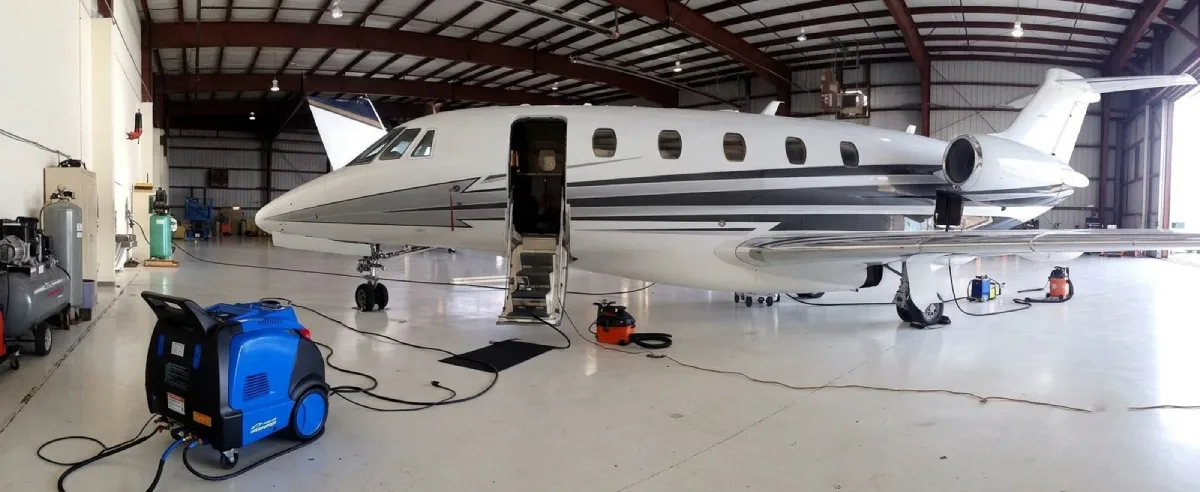
Steam is useful in an aircraft interior because it allows us to clean with very little water. Rather than saturating upholstery or carpeting, controlled vapor can loosen dirt and residue while keeping the amount of moisture introduced to the surface low. That is an important practical consideration when drying time matters. Steam can also be directed into seams, edges, gaps, and other awkward spots where a cloth or larger cleaning tool may struggle to reach. The benefit is not simply that the steam is hot. It is the control over heat and moisture, combined with the ability to work in areas that are otherwise difficult to clean thoroughly.
The Areas That Deserve Close Attention
A cabin contains many small surfaces that can collect dirt over the course of repeated use. We typically look closely at:
- Seats and upholstery, particularly seams, creases, edges, and areas exposed to frequent contact.
- Carpets and flooring where dust, debris, and tracked-in dirt accumulate.
- Tables, handles, panels, armrests, and other commonly handled surfaces.
- Corners, gaps, edges, and confined spaces that are easy to overlook during routine cleaning.
- Areas with visible stains, grease, residue, or persistent odors.
None of these areas exist in isolation. A cabin can have clean seats and still feel poorly maintained if the flooring is dirty or the surfaces around the seating area have been neglected. Those small details add up, which is why a careful cleaning process looks at the interior as a whole.
Creating a Cabin That Feels Fresh Again
A comfortable cabin is about more than appearance. People notice how a space smells, how clean the surfaces feel, and whether the interior looks properly maintained. Upholstery that has been cleaned, flooring that is free of accumulated debris, and surfaces that have received careful attention can change the overall feel of the cabin. Odors deserve particular attention because masking a smell does not address the material holding onto it. When residue or buildup is contributing to an odor, cleaning the affected surface is a more sensible place to start.
At GVMS 1 Steam Cleaning, we use vapor steam cleaning to work across a range of aircraft interior surfaces while keeping moisture to a minimum. We do not treat every material as though it were identical. Upholstery, carpeting, hard surfaces, and detailed areas each require appropriate handling. That attention to the material is just as important as the cleaning equipment itself. A good result comes from knowing where to apply heat and vapor, how much moisture to use, and where a gentler approach makes more sense.
Keeping the Interior Easier to Maintain
Deep cleaning does not have to be reserved for an interior that has reached the point where every surface needs attention. Regular professional cleaning can help keep high-use areas under control and prevent ordinary dirt and residue from becoming increasingly difficult to remove. It also provides an opportunity to address stains and odors before they become more noticeable. For aircraft that see frequent use, consistent interior care can make the cabin easier to keep presentable between more intensive cleaning appointments.
Conclusion
A well-maintained cabin rests on the minute nuances that passengers may never consciously identify, yet they nevertheless notice when those elements are handled effectively. This is because passengers are paying attention to the details. Having clean upholstery, flooring that has been cared for, fresh surfaces, and paying attention to seams and locations that are difficult to access are all factors that contribute to a better interior atmosphere. If your aircraft requires more than a quick freshening up in the cabin, we will organize skilled aircraft interior cleaning services and discuss the areas that need attention. Call us to discuss the areas that need work.
FAQs
How often should an aircraft interior be professionally cleaned?
The ideal frequency depends on aircraft use, passenger volume, and the condition of the interior. Regular cleaning helps keep high-use areas fresh and easier to maintain.
What areas are covered during professional aircraft interior cleaning?
Cleaning can include upholstery, carpets, flooring, seats, tables, handles, panels, seams, corners, and other hard-to-reach areas. The process can be adjusted according to the interior's materials and condition.
Is steam cleaning suitable for aircraft upholstery and carpeting?
Controlled steam can be used on suitable upholstery and carpeting while introducing very little moisture. The cleaning method is adjusted according to the material and surface condition.
Can steam cleaning help remove odors from an aircraft interior?
Steam cleaning can help address odors associated with dirt, residue, and buildup on interior surfaces. Cleaning the source can provide a more practical approach than simply masking unwanted smells.
How does low-moisture steam cleaning benefit aircraft interiors?
Low-moisture steam cleaning uses limited water while helping loosen dirt and residue from interior surfaces. This can support more efficient drying and careful cleaning of detailed areas.