Ask anyone who works a crush season or a packaging shift, and they’ll tell you the same thing: cleaning a brewery or winery is never one job. A barrel wants one thing, a stainless tank wants another, and the bottling line has quirks of its own. Residue builds up around fittings, seams, conveyor components, and joints, usually in the places nobody reaches when the schedule is tight. Steam cleaning for wineries and breweries can help there. Dry vapor steam handles a lot of different surfaces with very little moisture, and that matters in buildings where overspray and runoff are already daily annoyances.
Cleaning Wooden Barrels and Tanks
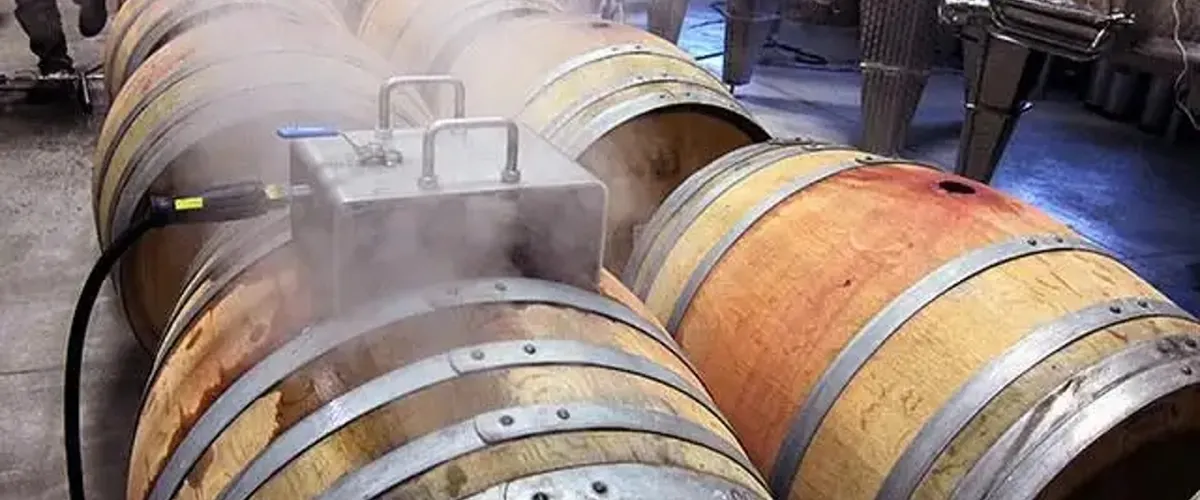
Wood is not steel. Barrels remind you of that quickly. The grain, the pores, the seams, and the joints all hold residue long after the surface looks fine, which is why a wipe-down or a hard rinse only gets you partway. Steam lets us work through those areas slowly and deliberately. Tanks are a separate problem. Between the sheer size, the fittings, the seams, and the interior surfaces, the approach has to be built around the specific piece of equipment, not borrowed from the last one. So before any steam goes anywhere, we look at what the thing is made of, how it was put together, what condition it’s in, and what’s going on around it. That assessment is most of the job. Running one method over everything is rarely good cleaning.
Keeping Kegs, Bottles, and Processing Equipment Clean
Past the barrel room, it gets fiddly. Kegs, bottles, conveyor belts, and processing machinery pick up residue as product moves through, and they’re loaded with narrow edges, connections, moving parts, and corners that eat up hours by hand. Steam lets us go straight to the spots where buildup tends to form without soaking the area around them. It also means steam cleaning for wineries and breweries isn’t limited to one type of equipment. It has a place at several points along the line.
Reaching the Areas That Are Easy to Miss
Get down on one knee next to a machine and look at the legs, the joints, the seams, the corners, the base. There’s almost always more going on than the top surface suggests. Dry vapor steam is useful here because it can be aimed into tight spaces without flooding the floor. Depending on the facility, we also use it on floors, windows, tasting areas, and other parts of the property. Overall, the approach favors careful detail over volume, with less water, fewer chemicals, and less wastewater runoff.
Where Steam Cleaning Fits Into a Facility
Steam does its best work when it slots into the cleaning procedures a facility already has, and that doesn’t mean every surface gets the same treatment. Material, equipment design, production demands, and surface condition all shape the right method. In a typical winery or brewery, potential applications can include:
- Wooden barrels and tanks
- Kegs, bottles, and bottling equipment
- Conveyor belts and processing machinery
- Floors, windows, and tasting areas
- Seams, joints, cracks, fittings, and other difficult-to-reach spaces
Broken down like this, it stops feeling like one giant project. You have particular surfaces and particular machines, each with its own needs, and we pick the method that suits each one while staying out of production’s way as much as we can.
Why Low-Moisture Steam Matters
More water isn’t always better, even though water obviously cleans. In a production space, extra water travels. It reaches neighboring areas, adds to runoff, and leaves more to mop up later. Dry vapor steam is a tighter option where lower moisture helps. Our winery and brewery service uses a fraction of the water traditional methods do, and it’s designed to keep overspray and wastewater runoff to a minimum. With a lot of equipment, cramped work areas, or surfaces that shouldn’t be saturated, that gap adds up fast. Crews also get more control over exactly where the moisture goes, something you don’t fully appreciate until you’ve cleaned up after the alternative.
Supporting a Consistent Cleaning Routine
A clean-looking surface only tells you so much. A dependable program also considers how often each area gets attention, which surfaces need a harder look, and whether the method actually suits the equipment. On-site testing adds a useful layer, since it gives measurable results from before and after service. We use that together with visual inspection and the facility’s existing procedures to see where extra effort might be worth it. At GVMS 1 Steam Cleaning, we work with wineries and breweries to find practical uses for dry vapor steam and build the service around the surfaces and equipment that really need it.
Conclusion
Wooden barrels, stainless tanks, kegs, bottles, conveyors, and processing equipment all call for careful cleaning. The real question is where steam fits, how much moisture each surface can handle, and how the work can fit around your production schedule. If you’re exploring brewery sanitation steam cleaning in Houston, get in touch with us. We’ll look at your equipment, surfaces, and cleaning priorities and help you determine where professional steam cleaning can add value to your routine.
FAQs
What is dry vapor steam cleaning?
It's a low-moisture steam method that cleans surfaces with heat and very little water.
Can steam be used on wooden barrels?
Yes, steam can work through grain, pores, and seams, depending on the barrel's condition.
Will steam cleaning flood my production area?
No, dry vapor steam uses a fraction of the water of traditional methods and keeps overspray and runoff down.
Which brewery and winery surfaces can be steam cleaned?
Barrels, tanks, kegs, bottling equipment, conveyors, floors, windows, and tasting areas can all be treated.
Do you offer brewery sanitation steam cleaning in Houston?
Yes, contact us to discuss your equipment and cleaning needs.