Houston’s craft beer scene has come a long way, and the breweries pushing it forward aren’t just competing on recipes anymore. They’re competing on consistency. Walk into any well-run brewhouse and the equipment gleams, the drains don’t stink, and nobody’s cutting corners on cleanup. That’s not an accident.
Tanks, kegs, barrels, and processing lines are exactly the kind of environment wild yeast and bacteria love, and if sanitation slips even a little, a batch can go sideways fast. This is why Brewery Sanitation Steam Cleaning Houston has become a baseline expectation, not a nice-to-have. It protects the beer, the equipment, and the brewery’s name.
The Hidden Risks Lurking in Brewing Equipment
Beer is made from living things. Grains, hops, yeast, all of it creates a near-perfect breeding ground for microbial growth the moment surfaces aren’t cleaned properly. And the problem spots are rarely obvious. Tank seams, valve fittings, hose connections, the porous wood inside aging barrels, these are where trouble hides. Brettanomyces and Zygosaccharomyces are two usual suspects, along with tartrate buildup, and they’ll quietly mess with flavor and aroma long before anyone notices. Add bacteria like E. coli, Listeria, and Salmonella into the mix, especially around food-contact surfaces, and it becomes a safety concern, not just a quality one. Ignore it long enough, and it stops being a single ruined batch. It becomes a production line problem.
Why Traditional Cleaning Methods Fall Short
Most breweries still lean on standard washdowns, chemical disinfectants, or hot water rinses, and to be fair, these methods aren’t useless. They just have limits. Chemicals and hot water rarely dig deep enough into harborage areas or oak barrel pores where contamination actually lives. Worse, chemical residue can hang around on equipment and subtly affect the taste of the beer itself. Then there’s the rinsing. Getting all that chemical off means burning through more water and more time. For breweries built around a natural, low-intervention philosophy, spraying chemicals everywhere feels like it defeats the purpose.
How Dry Steam Solves the Problem
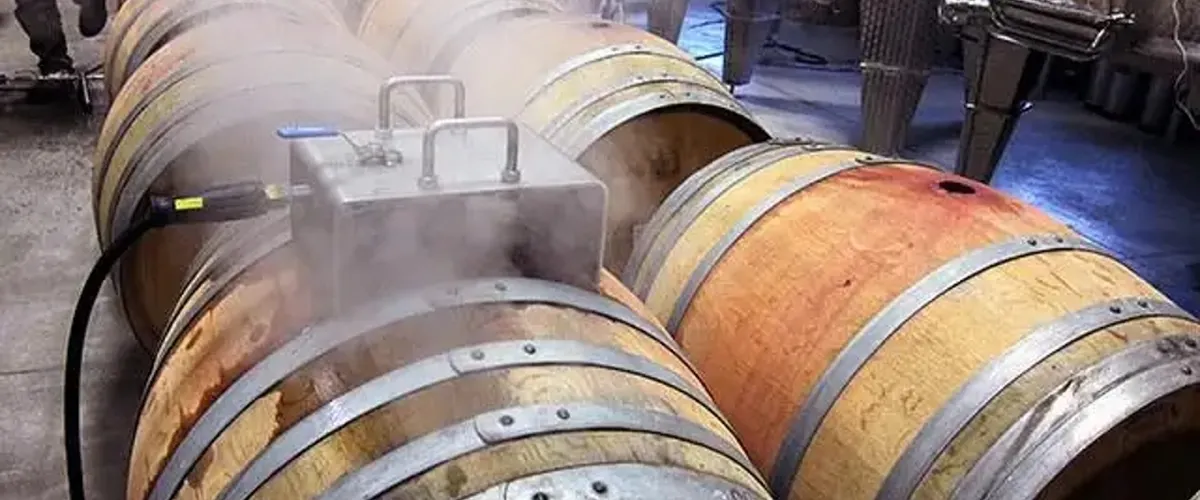
This is where the Optima Steamer earns its reputation. It was originally engineered for the wine industry, but it translates to brewery work just as well, maybe better. True dry steam behaves differently than people expect. It’s vapor, not liquid, so it moves fast and pushes into places water simply can’t reach, including deep into the wood grain of barrels. That penetration is what makes it so effective against Brettanomyces, Zygosaccharomyces, tartrates, and the long list of other micro-organisms that traditional cleaning tends to miss.
There’s also a practical side brewery owners appreciate once they see it in action. Steam takes less time to generate than heating a full tank of water, since it only needs a fraction of the volume, so cleaning cycles move faster. Hold steam at a high, consistent temperature, and it kills yeast and bacteria on nearly any surface, using barely any water and zero chemicals, whether that’s a fermentation tank or a corner of the tasting room nobody thinks to scrub. The Optima Steamer is ready to run within minutes, which cuts downtime and saves on energy costs too. Because the heat is relentless and the molecules are small enough to get past what hot water or chemicals can reach, it consistently outperforms older methods against spoilage yeast and bacteria like E. coli, Listeria, and Salmonella. Kegs, machinery, tight corners, all of it gets covered. That’s why more Houston breweries are building Brewery Sanitation Steam Cleaning in Houston into their regular maintenance schedule instead of treating it as an occasional deep clean.
Where Steam Cleaning Makes the Biggest Impact
Dry steam isn’t a one-trick tool. It covers nearly every corner of a working brewery:
- Cleaning and sanitizing barrels, tanks, and bottles
- Removing bacteria, yeast, mold, and fungi
- Sanitizing conveyor belts, processing machinery, and equipment
- Working alongside CIP, SIP, COP, and SOP systems
- Cleaning floors, grout, windows, and tasting areas without overspray
The Benefits Breweries Can Expect
Beyond the science, there are real operational perks worth mentioning:
- Lower water and chemical use
- No wastewater runoff or overspray to deal with
- Chemical-free sanitation from start to finish
- Deeper penetration into wood for stronger results
- Time and labor savings
- Deodorized, sterilized surfaces
- Access to nooks and crannies that usually get ignored
Protecting Quality, Consistency, and Reputation
Craft beer drinkers are picky, and rightly so. They expect the same flavor every time, and any inconsistency caused by contamination chips away at trust built over years. Sanitation isn’t just about passing a health inspection. It’s about protecting the recipe someone spent countless hours perfecting. Breweries serious about this avoid the costly stuff: wasted batches, unplanned downtime, reputation damage that’s hard to undo. There’s an environmental upside too. Less water, no chemical waste, it lines up naturally with values a lot of craft breweries already hold.
Conclusion
Houston’s brewing industry isn’t slowing down, and neither are customer expectations. Sticking with outdated cleaning methods is a quiet way to fall behind. GVMS 1 Steam Cleaning focuses on proof over promises, running on-site testing before and after service so results are visible, not just claimed, backed by lab-tested performance against Brettanomyces, E. coli, and Zygosaccharomyces. Working with a trusted provider for Steam Sanitation Services Houston means getting a method built for what breweries actually deal with day to day. From the barrel room to the bottling line, real sanitation is what lets a brewery’s beer taste exactly the way it’s supposed to, batch after batch.
FAQs
How Often Should a Brewery Schedule Steam Sanitation?
Most craft breweries benefit from steam cleaning as part of regular maintenance, not just an occasional deep clean. Frequency depends on production volume, but tanks, kegs, and barrels should be sanitized between every batch cycle.
Is Dry Steam Safe for Wooden Barrels?
Yes, dry steam is actually more effective on barrels than water or chemicals because it penetrates the wood pores. It kills spoilage organisms like Brettanomyces and Zygosaccharomyces without stripping or damaging the barrel itself.
Does Steam Cleaning Replace Chemical Sanitizers Entirely?
In most cases, yes. Dry steam sanitizes surfaces using heat alone, with no chemical residue left behind. This makes it a strong fit for breweries focused on natural, additive-free production processes.
Can Steam Cleaning Be Used on Brewing Equipment While It's Running?
No, sanitation is typically done between brewing cycles when tanks, lines, and equipment are empty. This ensures full surface contact and avoids interrupting active fermentation or production schedules.
What Makes Steam Sanitation More Eco-Friendly Than Traditional Methods?
It uses a fraction of the water required for standard washdowns and produces no wastewater runoff. Combined with zero chemical waste, it aligns naturally with sustainability goals many breweries already prioritize.